Industry: Non-Profit | Role: Curriculum Designer and Lead Facilitator | Deliverables: Curriculum, 20+ hours virtual facilitation, facilitation infrastructure
The problem
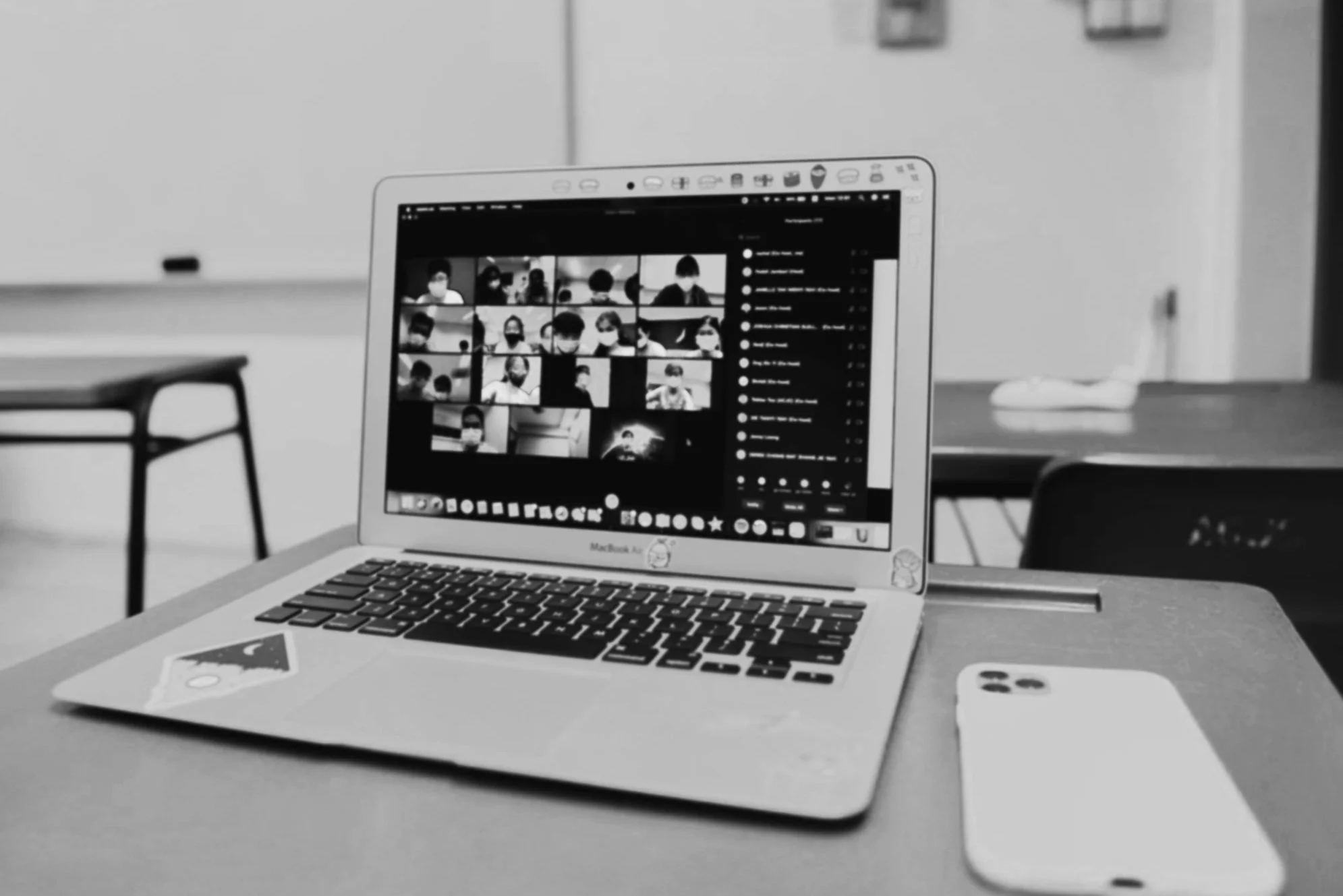
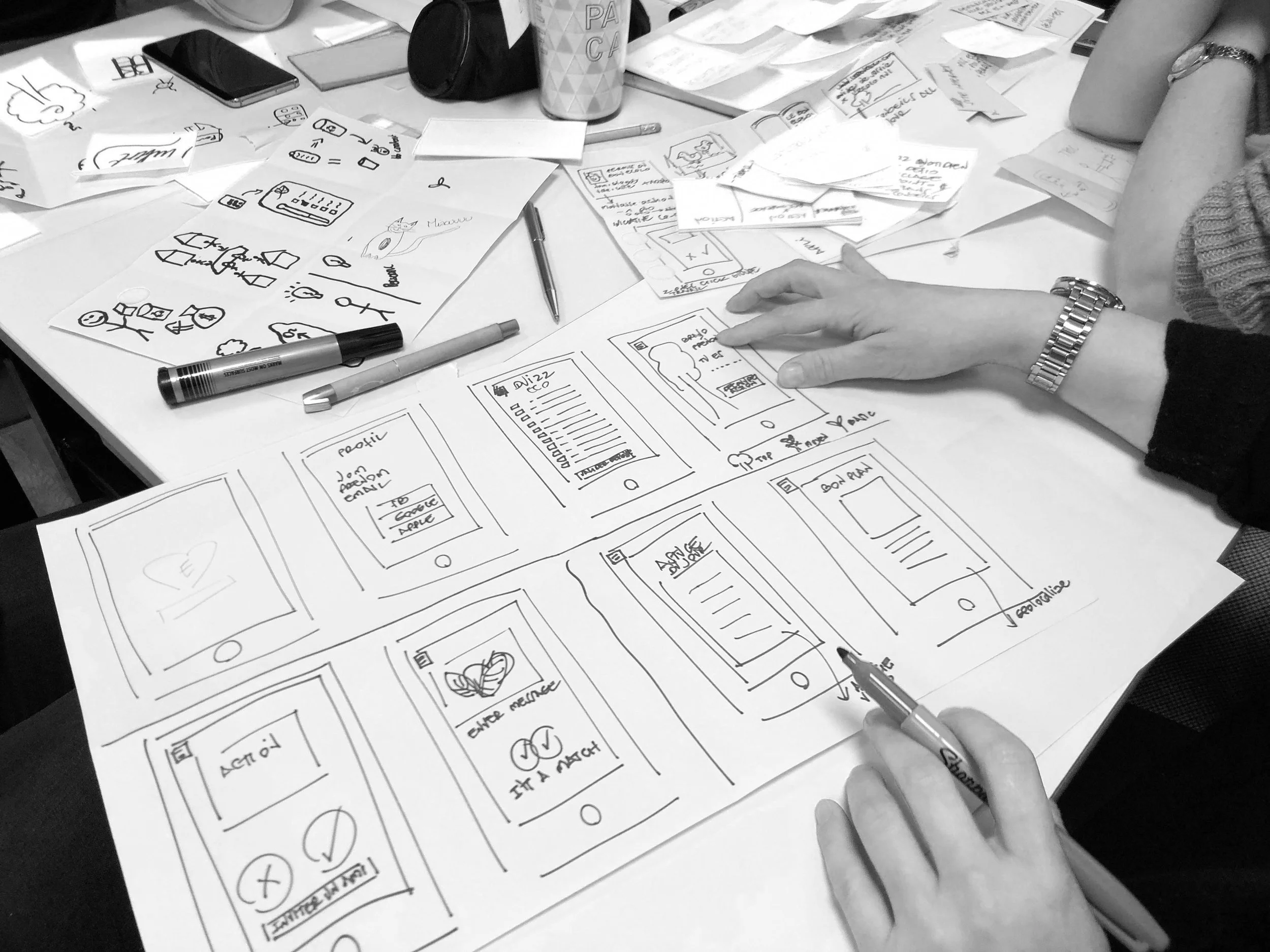
A major international nonprofit ran annual in-person design thinking training sessions to build research and problem-solving capabilities across its global teams. These sessions took three full days, were paper-based, and fast-paced. Then 2020 made this format impossible.
They needed not just a translation of the content to virtual, but a wholesale redesign of how distributed, cross-cultural learning actually works when you cannot put people in a room.
The problem
A major international nonprofit ran annual in-person design thinking training sessions to build research and problem-solving capabilities across its global teams. These sessions took three full days, were paper-based, and fast-paced. Then 2020 made this format impossible.
They needed not just a translation of the content to virtual, but a wholesale redesign of how distributed, cross-cultural learning actually works when you cannot put people in a room.
What I did
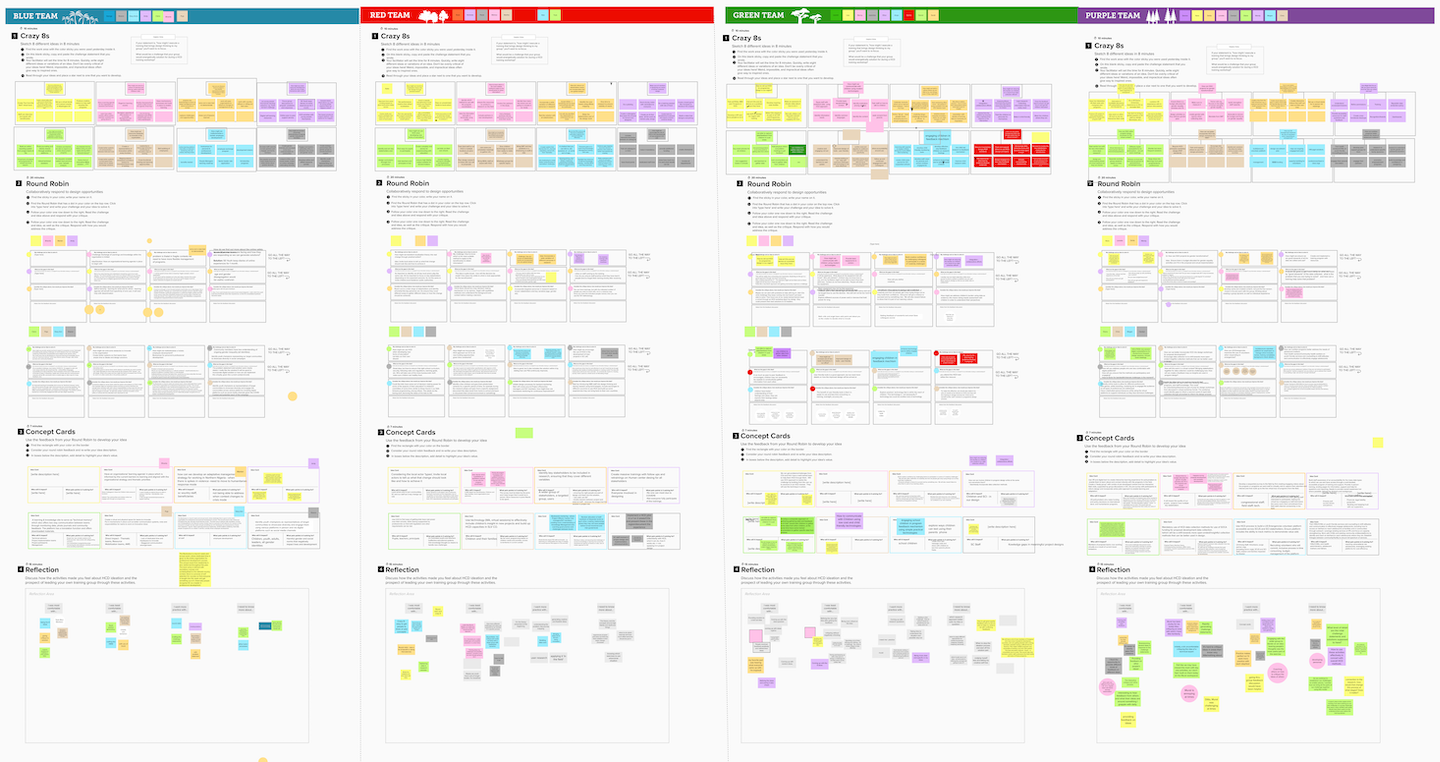
I redesigned the entire training structure from the ground up for a virtual context. Over two weeks, I facilitated a training series for 31 participants across 21 countries, developing all curriculum, agendas, and session decks myself.
I coordinated and coached six breakout facilitators, ran office hours for materials questions, and wrote all participant communications to set expectations and recap learning. The facilitation infrastructure I built, including the templates, breakout structures, and communication cadence, had to hold across time zones, languages, and wildly varying levels of design familiarity.
Throughout the sessions, I used empathy mapping, journey mapping, and prototyping as the core methodological spine, adapting each for the constraints of virtual delivery.
What moved
The training was a success. The nonprofit has maintained the program as virtual ever since, and continues to use the templates and structures I developed. The work I built in 2020 is still running.
What this taught me
Organizational design is design. Structuring how a distributed group of people learns, collaborates, and develops shared language around human-centered practice is fundamentally the same discipline as designing a product. It just looks different on the surface.