
Industry: Health | Role: Research Lead | Deliverables: Diary Study, Heuristic Evaluation, Insights, Wireframes, Design System

The problem
One of the nation's largest cancer centers was undertaking a digital transformation. Their patient portal worked, technically. But it was not built around how patients and caregivers actually navigated a cancer diagnosis, and the gap showed. They needed their redesign to be grounded in real human behavior, not assumptions.
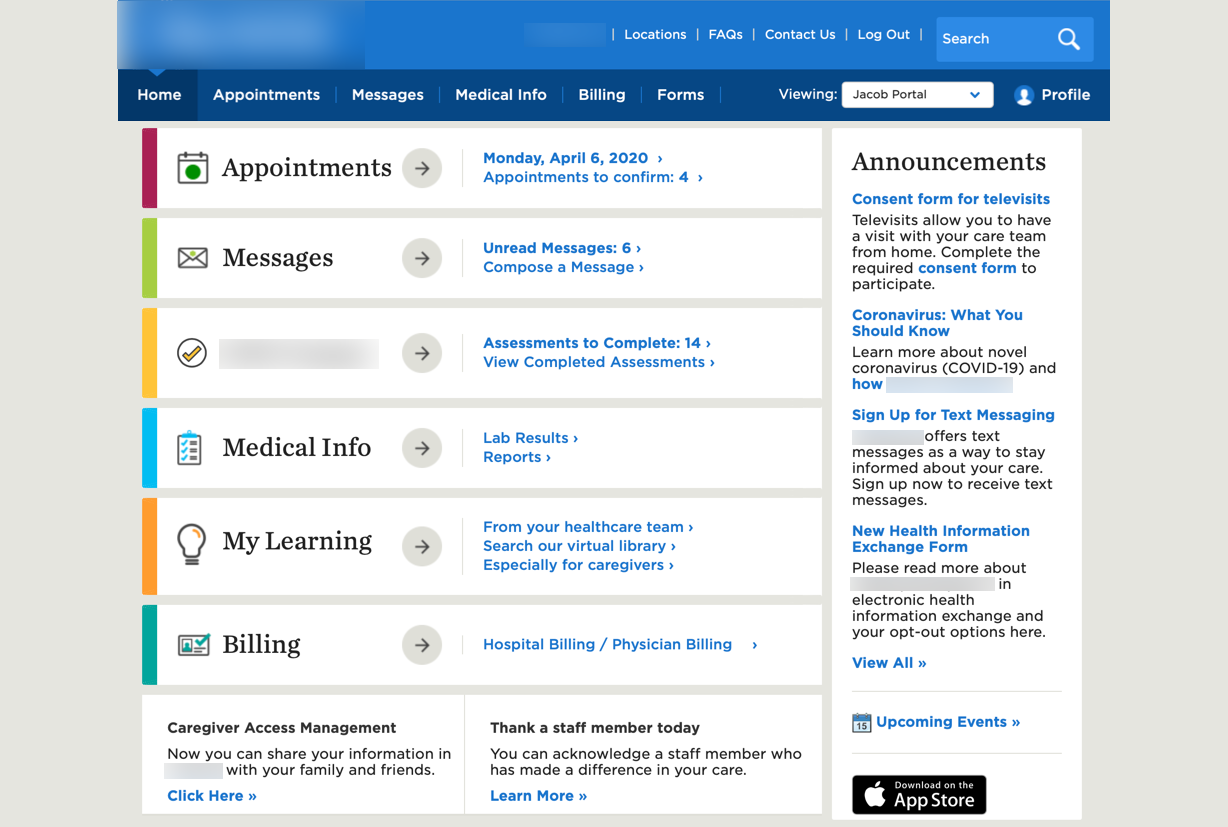
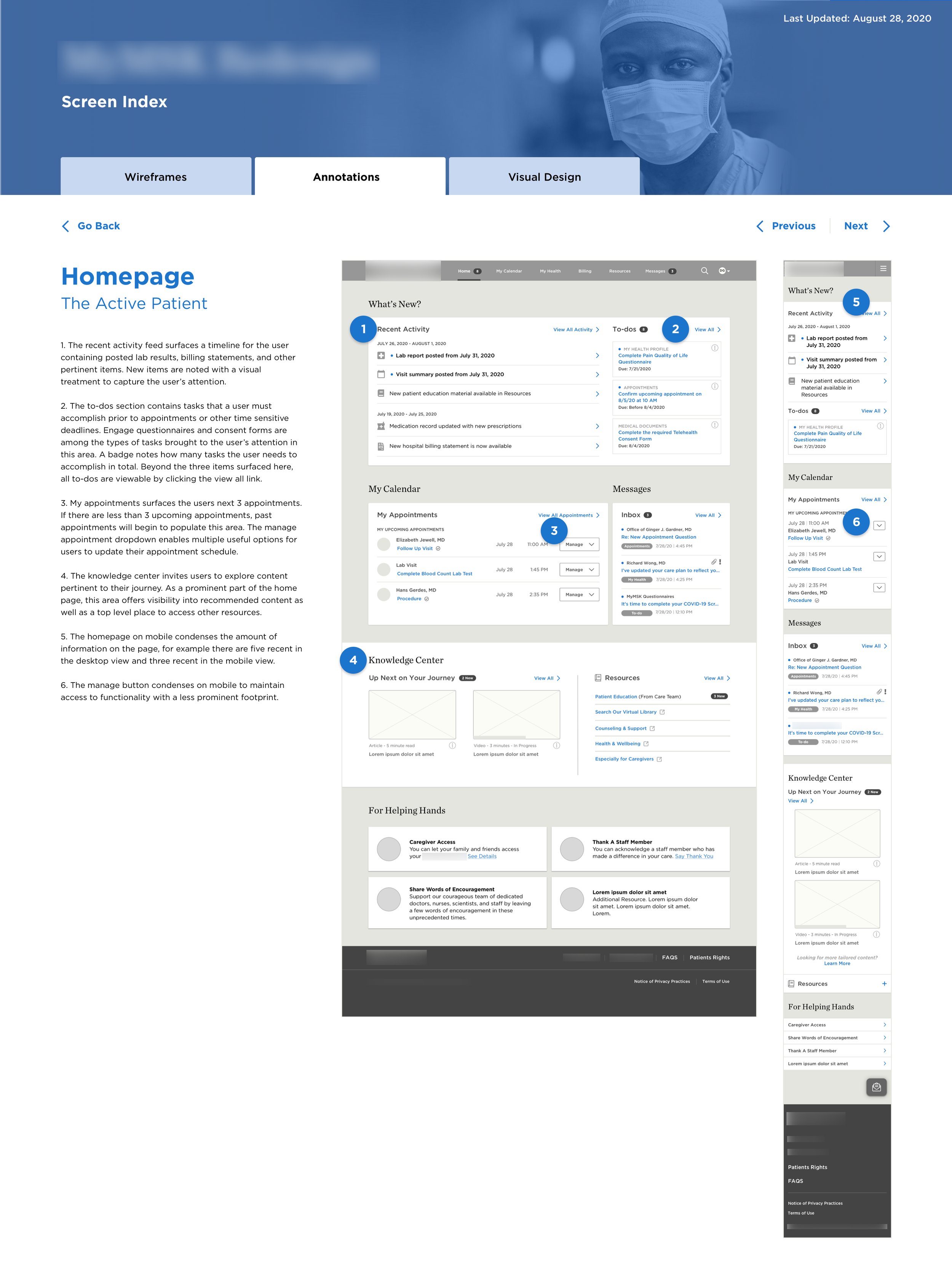
The original portal homepage design, prior to our project
What I did
I led research using two distinct methods that ran in parallel. I recruited cancer patients and caregivers via Dscout and ran a mobile diary study, capturing 40 participants' lived experiences with the platform over time. Separately, I conducted direct interviews with patients and caregivers to go deeper on the needs, pain points, and emotional texture that diary data alone could not surface.
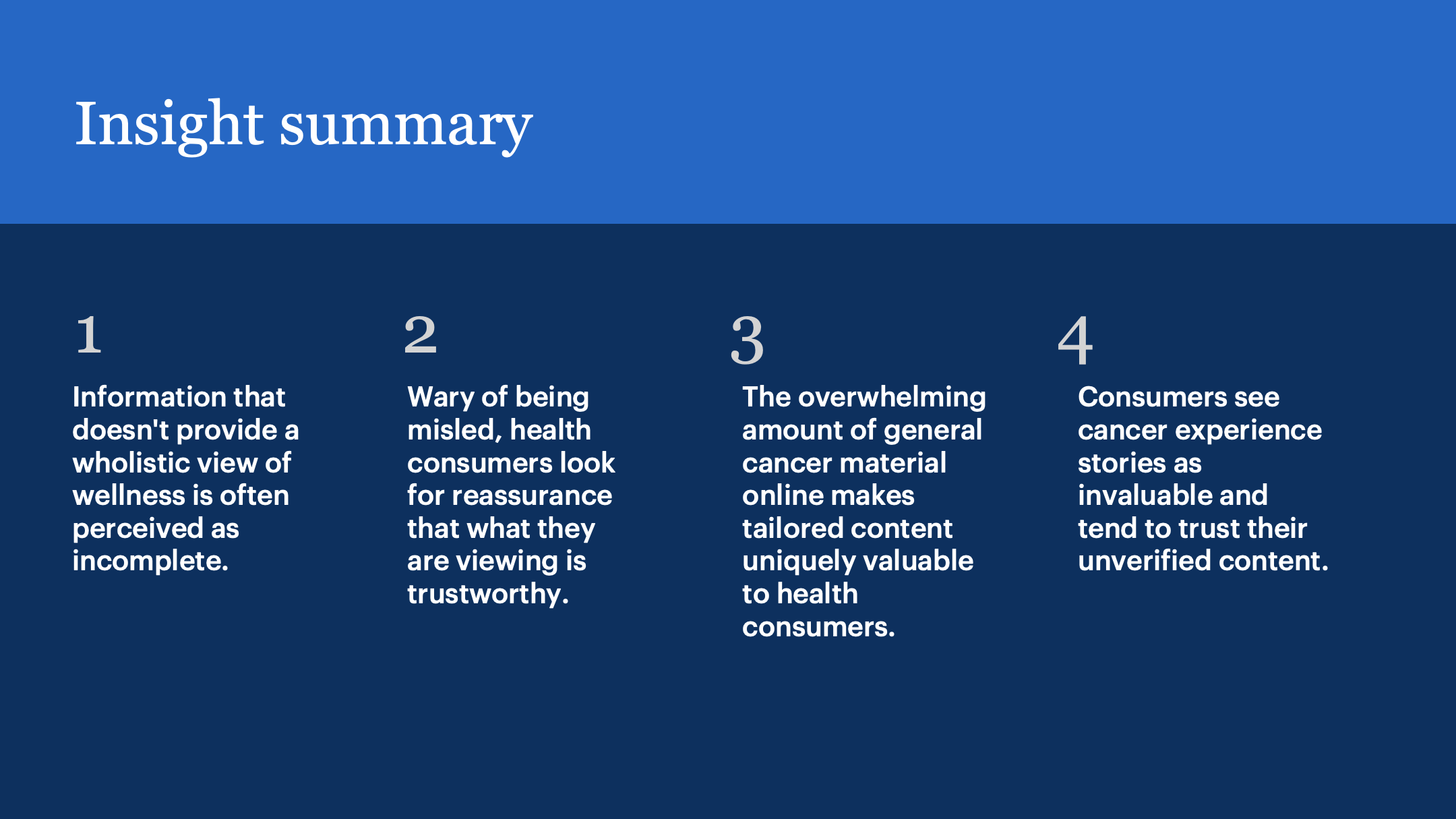
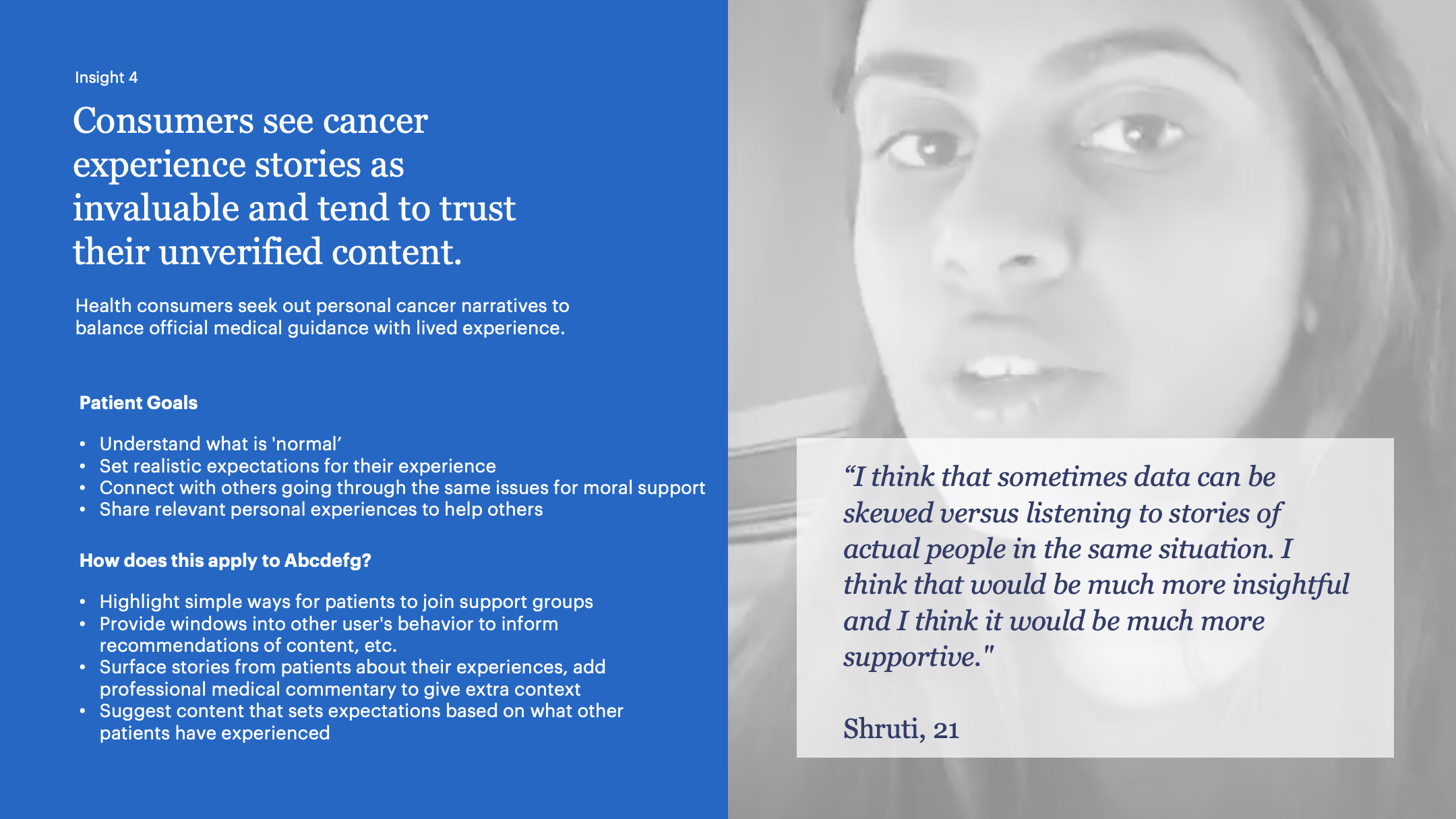
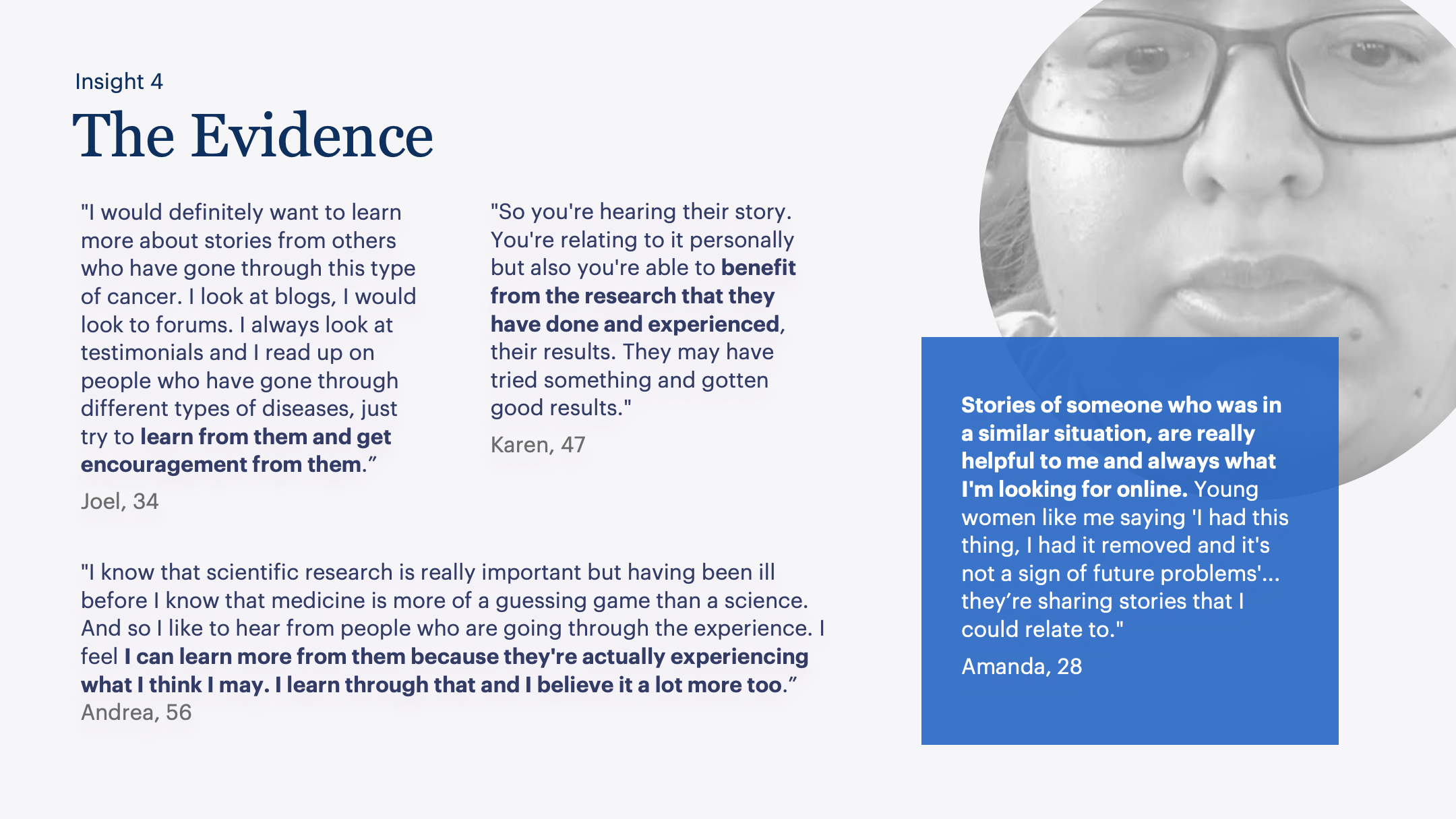
In parallel, I led a heuristic evaluation of the existing portal with a team of four evaluators, identifying distinct usability failure points across desktop and mobile. From those two streams, I synthesized the research into four key insights, including a counterintuitive yet well-evidenced finding: patients actively distrust the portal's clinical content and instead turn to unverified personal cancer stories online because those feel more relevant to their actual situation.
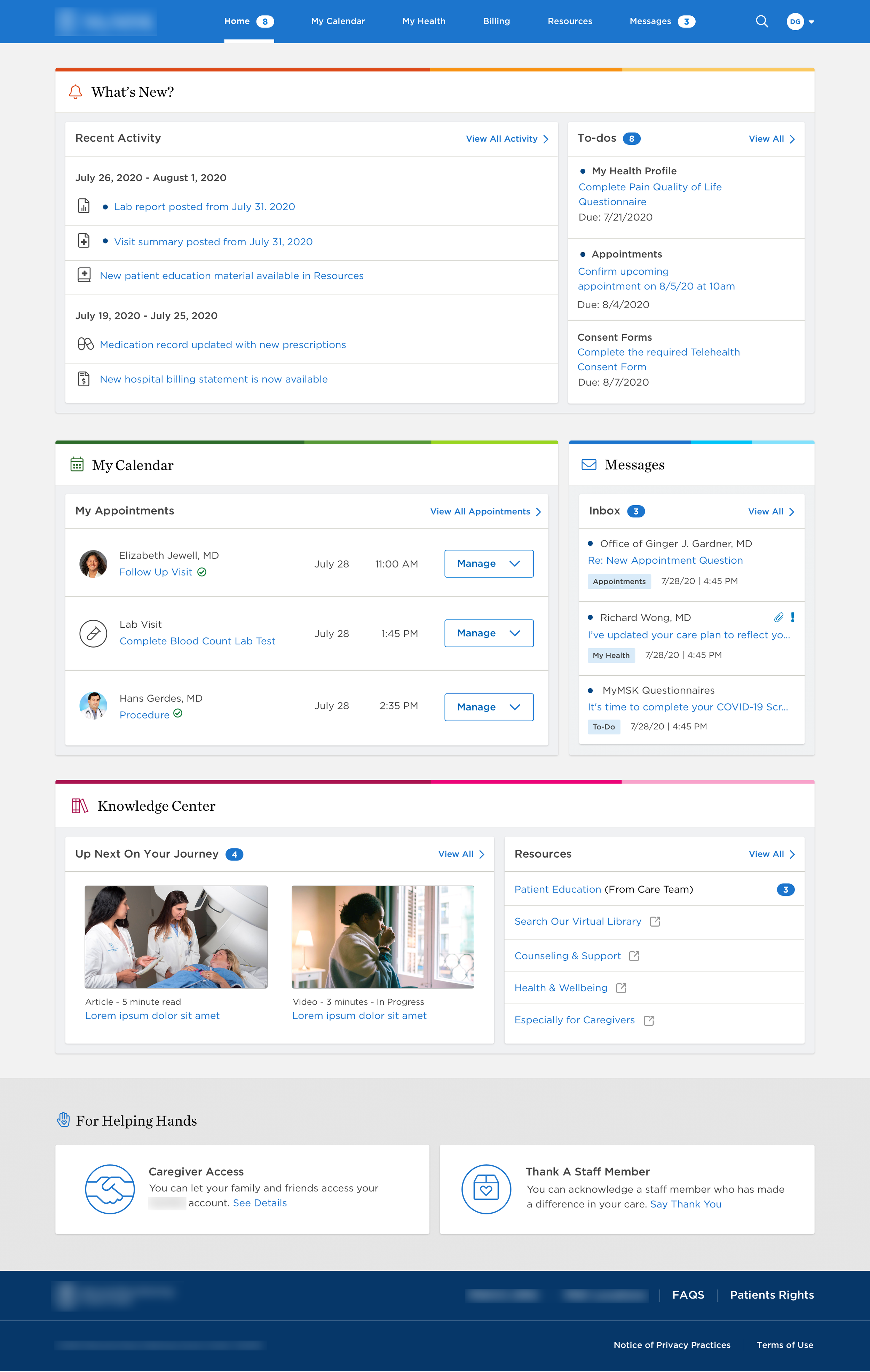
I translated findings into actionable opportunities and collaborated with a multidisciplinary team of designers, developers, and healthcare professionals to create and test prototypes.
What moved
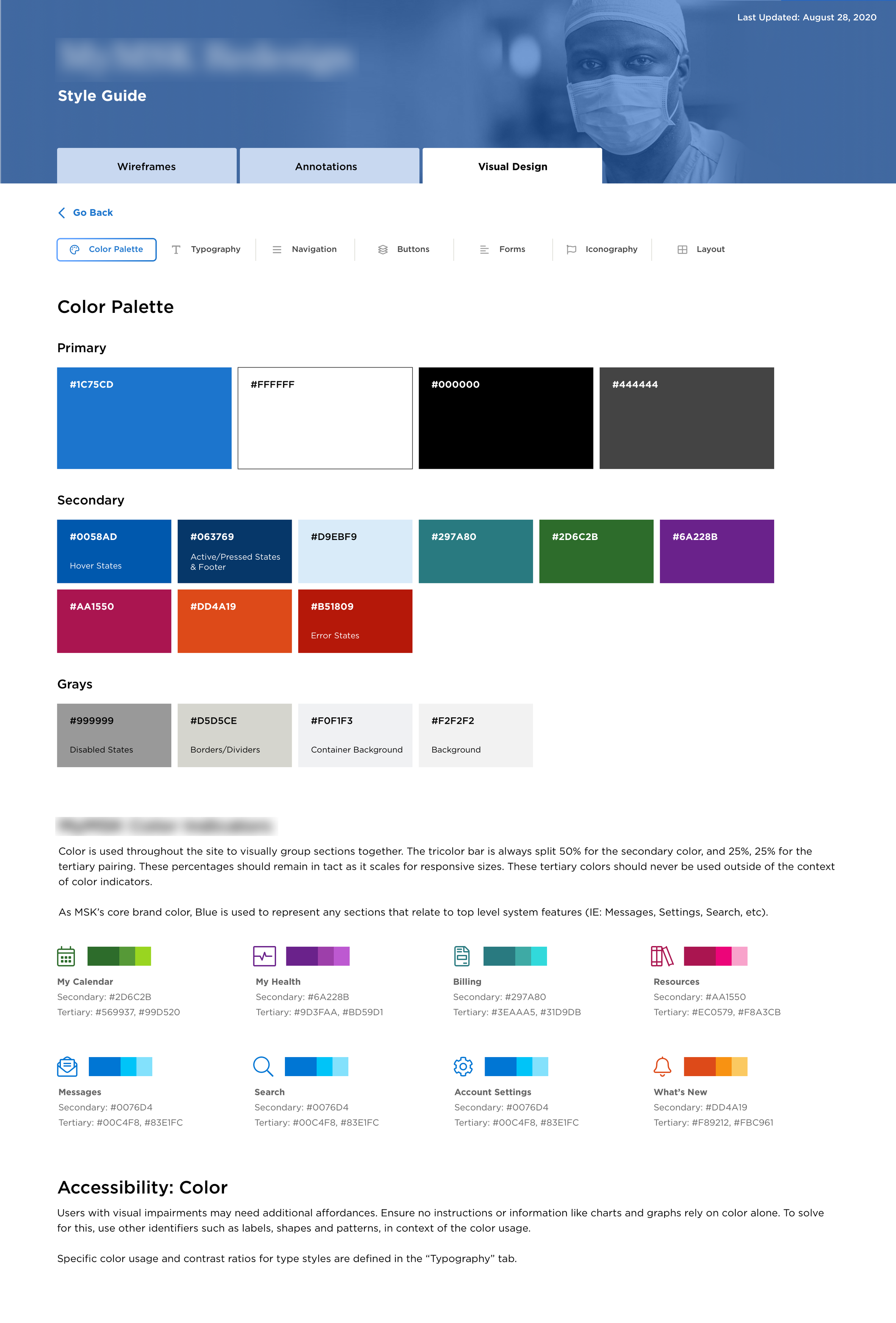
The client now has a highly-rated app, a redesigned portal, and a telemedicine experience that patients describe as easy to use. The design system built through this engagement provides the foundation for continued iteration.

What this taught me
In high-stakes health contexts, the most important research finding is often the one that challenges what the client assumes patients want. Surfacing the trust gap between clinical content and patient community knowledge reframed the entire design direction.