Industry: Child Care | Role: Solo Researcher & Research Program Designer |
Deliverables: Research readout, Co-creation workshops, Future State Journey Map, Concepts, Wireframes, Usability Testing
The problem
When COVID-19 locked parents out of childcare centers overnight, a digital app that had been a convenience became a lifeline. The leadership team knew it. They moved fast to commission a full redesign, with a clear direction: make the app worthy of the trust parents were now placing in it. My clients needed a research partner who could understand what parents and teachers needed, and make sure the experience got it right.
What I did
Phase 1: Building the foundation
As the sole researcher and research program designer, I built and ran an 8-week research and co-creation program from the ground up.
I recruited and interviewed 19 parents across 4 regional markets, spanning infant, toddler, and preschool families, single- and multi-child households, alongside 21 employees representing teachers, center directors, regional managers, and corporate stakeholders across 10 divisions and 4 business models. All of it virtual.
From that research, I developed a dual mindsets framework: 4 parent archetypes (the Novice, the Watcher, the Buyer, the Partner) and 2 employee archetypes (the Pro, the Climber), mapped across axes of engagement, comfort, and career orientation. The mindsets became the shared language for the co-creation phase that followed.
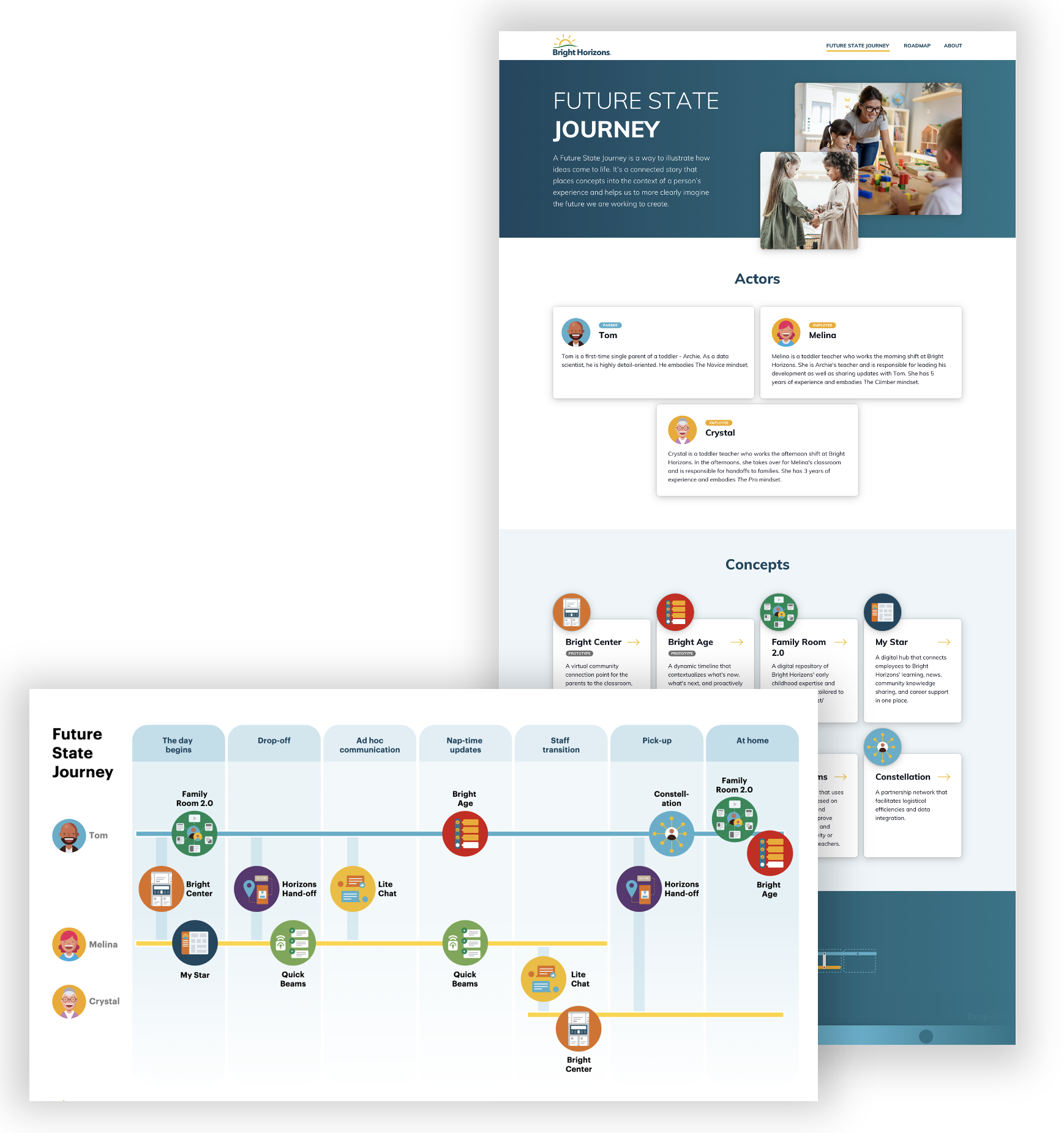
In co-creation, I facilitated multiple rounds of structured ideation with stakeholder groups across the organization, using the mindsets as pressure-test lenses. Nine concept clusters emerged, organized around four opportunity spaces: logging and data visibility, connecting to corporate, managing transitions, and communication. Each concept was mapped to the moments that mattered most, from daily drop-off to monthly milestone meetings to the organizational chaos of a sudden corporate policy change hitting a center without context.
This phase closed with a future state journey, a prioritized concept set, and a product roadmap, handed directly to the product team as a live brief to build from, not a report to be shelved.
Phase 2: Research in the build
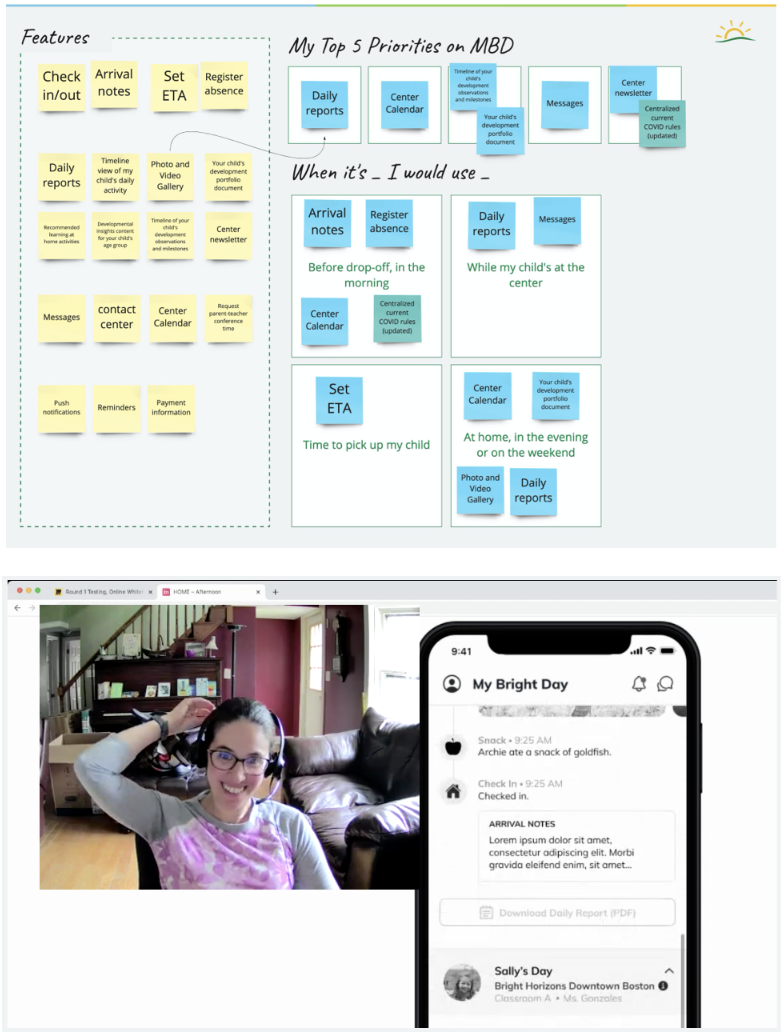
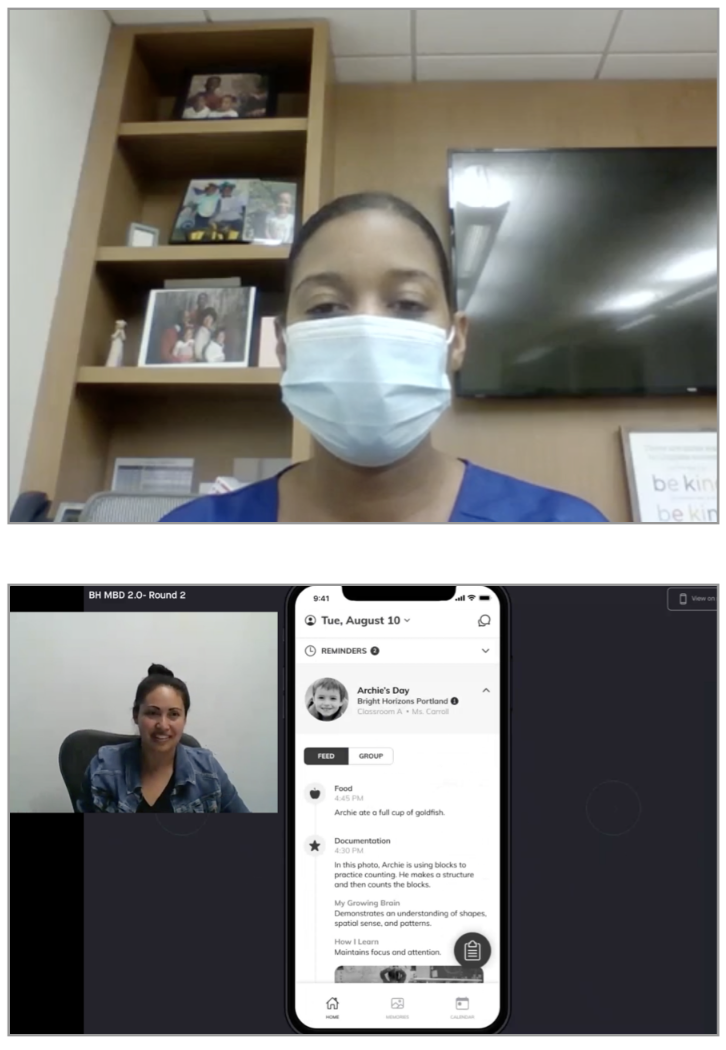
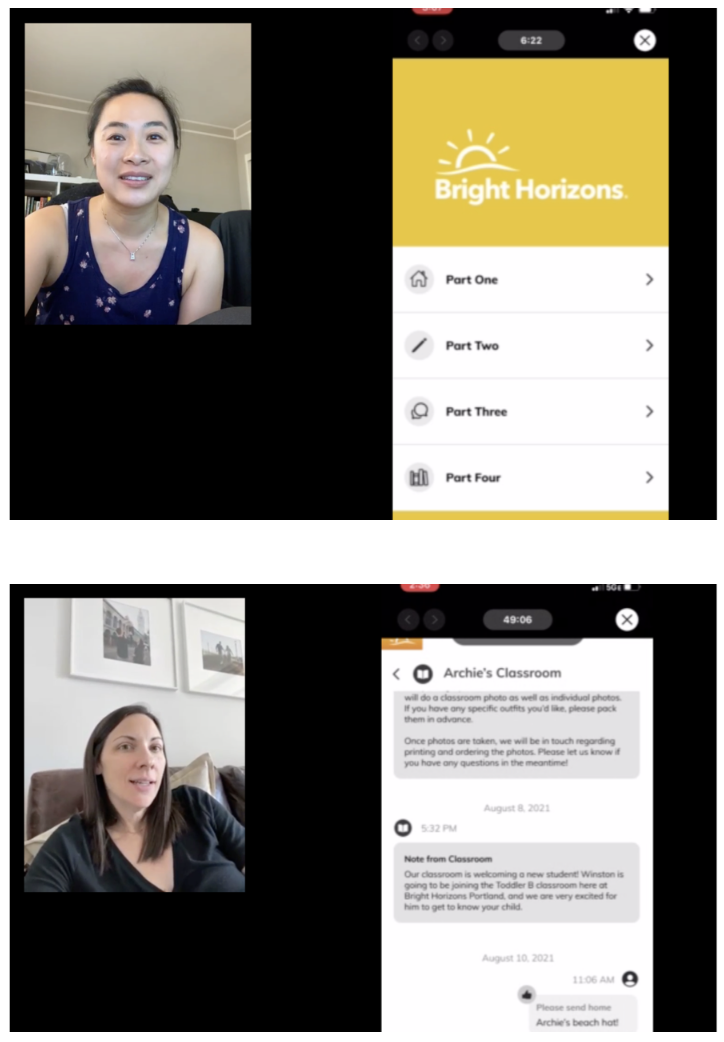
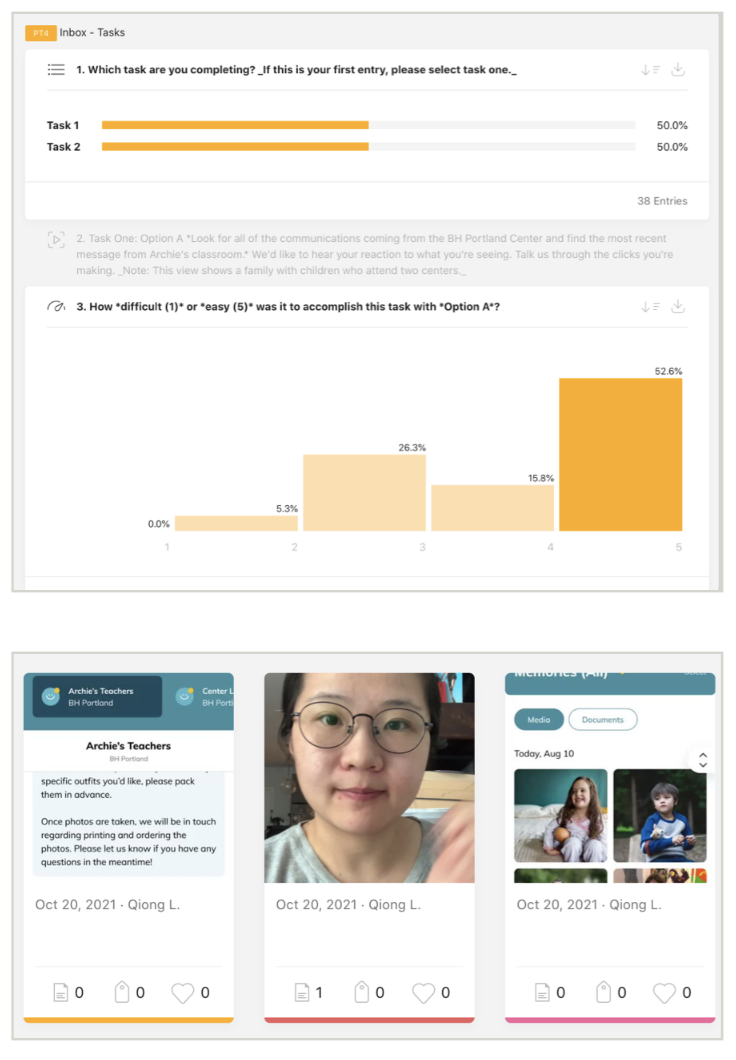
When the product team moved into design and development, I stayed. Over five independent research sprints running in parallel with the build, I owned the full research cycle for each: defining the questions, recruiting participants, conducting sessions, synthesizing findings into discrete design decisions, and presenting recommendations directly to senior leadership.
This was not validation work. Each sprint was designed to shape what was being built in real time, with findings feeding back into the product before the next sprint began.
What moved
The app launched in December 2022. Parent response reflects the shift the research was designed to create.
"Absolutely massive improvement in user experience. App went from mediocre but functional to very, very good."
"Great app. Get to see my son's day in real time."
"Perfect. This app is perfect."
What this taught me
Running research as infrastructure, not a deliverable, changes what a product team can do. When synthesis is designed to be actionable in real time, the distance between insight and decision collapses. That is the model I bring to every engagement.